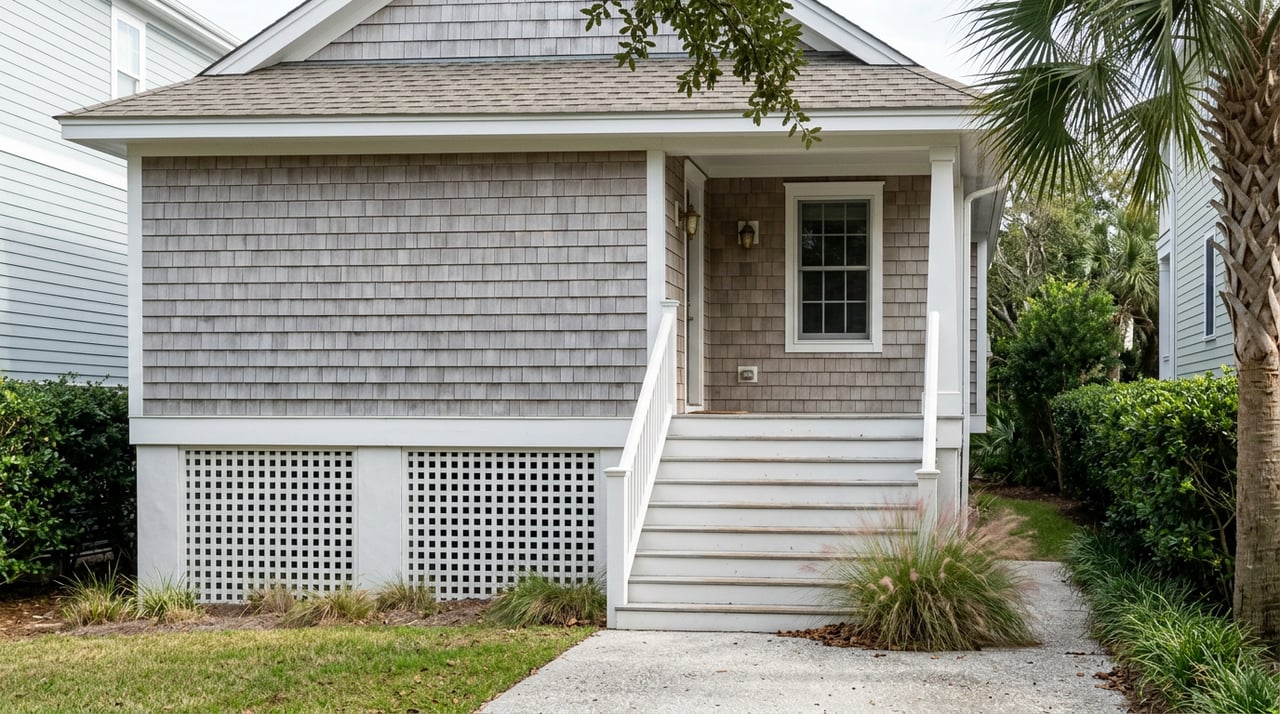
According to WECT, on September 8, residents of The Proximity apartment complex in Carolina Beach packed the town council chambers to object to a rezoning request most of them had not seen coming. The developer, Cape Fear Development, wanted to convert 15 of the complex's apartments into short-term rentals. Neighbors pointed out that when the project was approved back in 2021, the same developer had voluntarily promised no short-term rentals at all. One resident asked about the company's maintenance of the property after two years of normal leasing.
The council split 3-2. Mayor Lynn Barbee and council members Jay Healy and Wayne Rouse voted to approve the conversion. Vince Losito and Deb LeCompte voted against it, siding with residents. The vote passed anyway, and 15 units at The Proximity, off Lake Park Boulevard, are now short-term rentals.
That vote is a useful data point for anyone weighing a purchase in Carolina Beach or Kure Beach with rental income in mind. The vote also raises broader questions about how these towns regulate short-term rentals, and why the zoning district a property sits in matters more than which beach town it's in.
Why towns can't just ban this anymore
For years, coastal North Carolina towns tried to manage short-term rentals the way they manage most nuisances: registration desks, permit caps, lotteries, minimum separation distances between rental properties. Wilmington built exactly that kind of system.
In 2022, the North Carolina Court of Appeals struck it down. The case, Schroeder v. City of Wilmington, held that state law (N.C.G.S. § 160D-1207(c)) bars municipalities from requiring residential rental owners to register their properties or obtain permits tied to building code provisions for the simple act of leasing them out. Wilmington's scheme, described by Crest Cove as including a registration lottery, a 2% citywide cap, and a 400-foot separation requirement between rental properties, was preempted in one ruling.
That single case reshaped what every town up and down this stretch of coast has left in its toolbox. They cannot ban short-term rentals outright. They cannot cap the total number through a lottery. What they can still do is decide, parcel by parcel, which zoning districts allow the use in the first place. Zoning has become the last lever towns have, which is exactly why Carolina Beach's council spent an entire meeting arguing about a rezoning request instead of a permit application.
What zoning actually buys a town
According to the town's own planning and zoning materials, Carolina Beach's Highway Business District exists to accommodate businesses oriented toward the motoring public, the kind that need high traffic volume and direct access to major thoroughfares. It is not a beach cottage neighborhood. It is a commercial corridor.
That distinction is why the council could approve short-term rentals there without touching the town's residential zones. According to Port City Daily, Community Development Director Jeremy Hardison told council the Highway Business District is precisely where the town wants short-term rentals concentrated, away from the single-family streets closer to the water. Mayor Barbee, for his part, was candid about the limits of enforcement. Asked how the town would confirm that only 15 units were actually operating as short-term rentals rather than more, he posed the same question back:
"Who would make sure they were only rented for 31 days?" — Mayor Lynn Barbee, as quoted by Port City Daily.
That exchange raises a practical question about enforcement. The Proximity's own model unit had reportedly been operating as a short-term rental since the previous October, before any zoning approval existed. Hardison confirmed to reporters that town staff was aware of it after an August planning meeting, and that no notices or fines had been issued. The rule may say 15 units. In practice, the town's enforcement relies on complaints rather than routine inspections.
Kure Beach wrote the same permission into its residential code
If Carolina Beach's approach is a commercial carve-out layered onto a mostly residential town, Kure Beach took a different route years ago. According to Zoneomics, its RA-3A zoning district lists "tourist lodgings" as a permitted use alongside single-family homes. The zoning doesn't treat short-term rentals as an exception squeezed into a business corridor. It treats seasonal tourist housing as part of what the residential district was built for in the first place.
That's a meaningfully different mechanism, not just a friendlier attitude. In Carolina Beach, a buyer needs to know whether a specific parcel sits inside the Highway Business District or one of the town's residential zones. In Kure Beach, the due diligence question is different before writing an offer.
Then there's a second layer entirely separate from zoning: the HOA declaration. That private layer doesn't show up on a zoning map at all.
What this means if you're comparing these towns
The obvious question when comparing Carolina Beach, Kure Beach, and Wrightsville Beach for rental potential is usually "which town is friendliest to short-term rentals?" That's the wrong question, because the answer changes parcel by parcel within each town, not town by town on average.
The better question is what governs this specific address:
- Which zoning district does the parcel sit in, and does that district list short-term or tourist lodging as a permitted use?
- If it's a condo or planned community, what does the HOA declaration say about minimum stays, and does it predate or override the town's zoning permission?
- Has the town approved any conditional zoning or special exception tied to this specific property, the way Carolina Beach did for The Proximity?
- What occupancy tax applies, and who remits it? New Hanover County administers a 6% room occupancy tax, but Wilmington layers an additional 2% city lodging tax on top under its rebuilt Ordinance #0509.
None of this shows up in a listing description. It shows up in the zoning map, the HOA's recorded declaration, and sometimes in a town council agenda from a meeting that happened months before the property went on the market.
The number that actually matters
A median sale price tells you what a typical buyer paid. It tells you nothing about whether the specific home you're considering can legally generate nightly income, or whether that right survives a change in HOA leadership or a future council vote. The Proximity's 15 units are a live example of how fast that answer can change, in either direction, based on a single meeting.
If you're weighing a purchase in Carolina Beach, Kure Beach, or anywhere else along this stretch of coast with rental income as part of the plan, the zoning district and the HOA documents deserve the same scrutiny most buyers reserve for the inspection report. I'd rather walk that ground with you before you write an offer than help you untangle it after closing.
If you're thinking through what a specific property in Carolina Beach or Kure Beach can and can't do, Anna Sillery can help you pull the zoning and HOA answers before you get attached to a number that may not hold up.
This article is general information, not legal, tax or financial advice. Consult a qualified professional about your situation.